

How To Draw Shadow Letters A-z
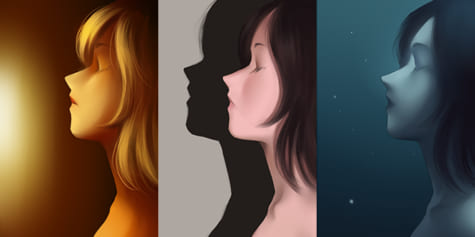
Level up with this guide on light and shade! By changing the blazon and direction of your light source, you can transform the feeling of your artwork. Artist Eridey explains all about the different types of light and shading that affect an object.
Light allows us to encounter colors and everything surrounding us; thanks to light, we tin distinguish the shapes and volumes of dissimilar objects. Today, I want to share some points to assist united states meliorate how nosotros interpret calorie-free and shadow in our drawings.
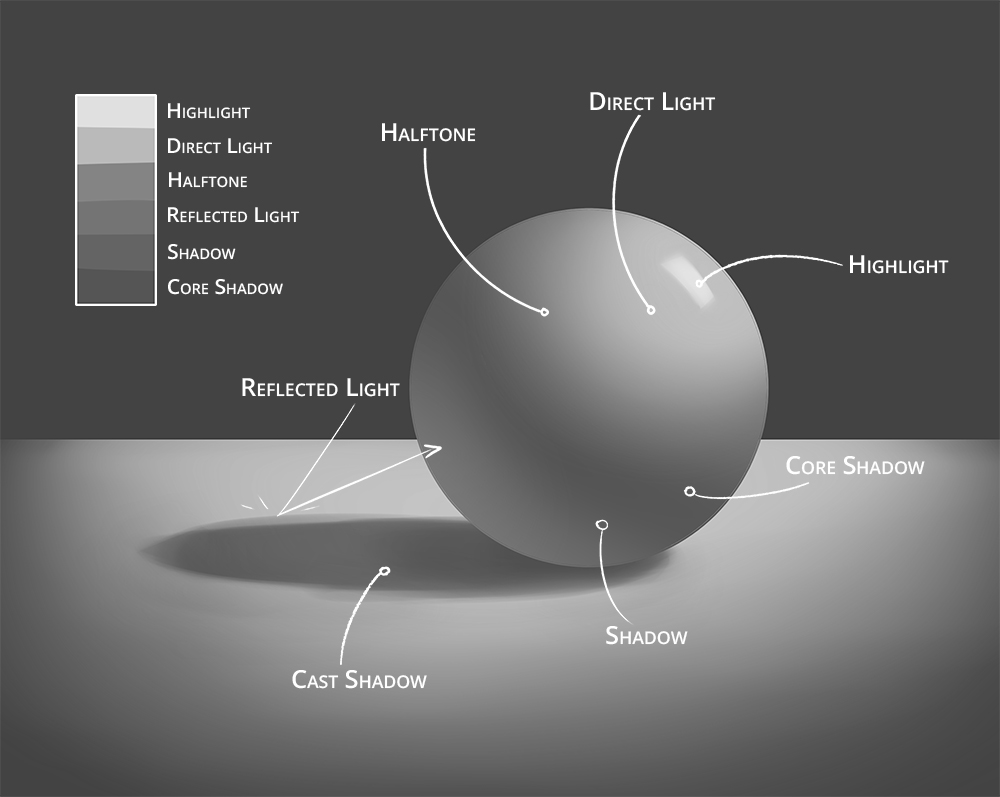
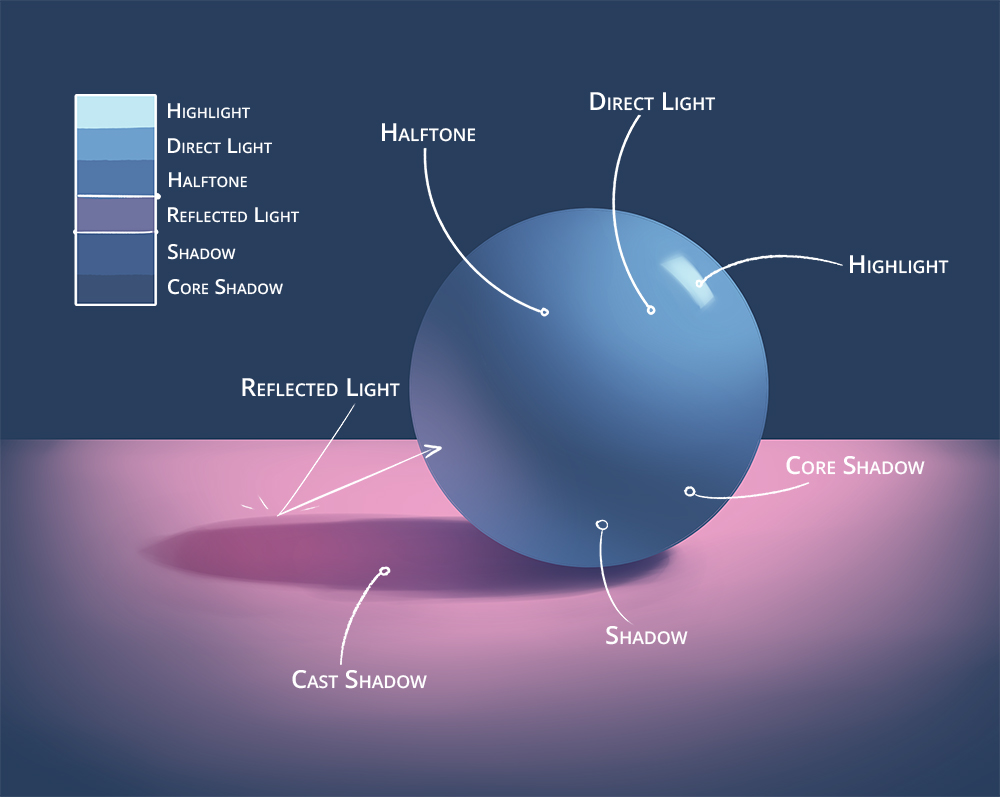
This classic example of a sphere on a table shows the primal interactions between low-cal and shadow.
Light Area
- Straight low-cal: This is the surface area of the object facing the lite, and where you come across the lightest light on the grade.
- Halftone: This is where the values start darkening to a neutral point between low-cal and shadow. It is also known as the base color (flat color) of the object.
Dark Side
- Core shadow: This is the contour of the shadow. In the case of a sphere, we tin observe a band-like shape following the shape of the object's surface. This area is commonly darker because neither the direct calorie-free nor the reflected calorie-free bouncing off the tabular array can touch this office of the object.
- Middle dark tone: This is a neutral tone betwixt the lightest and darkest tones of the shadow.
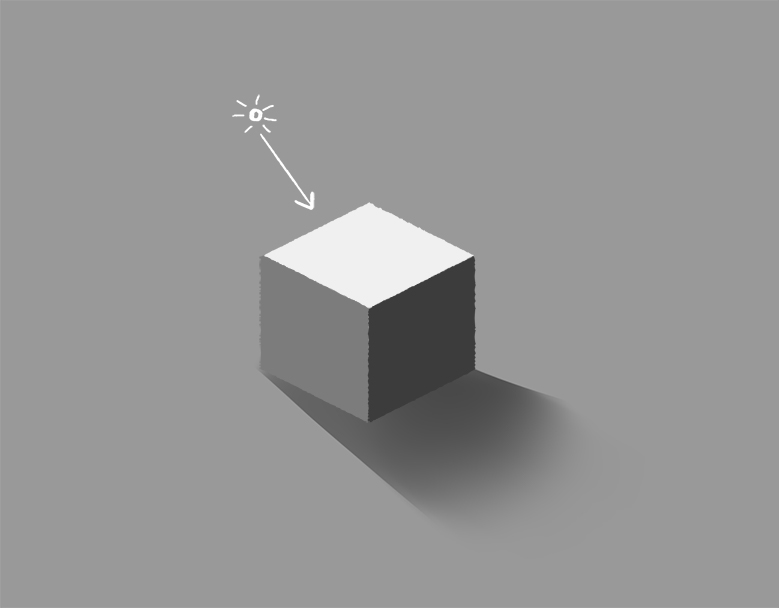
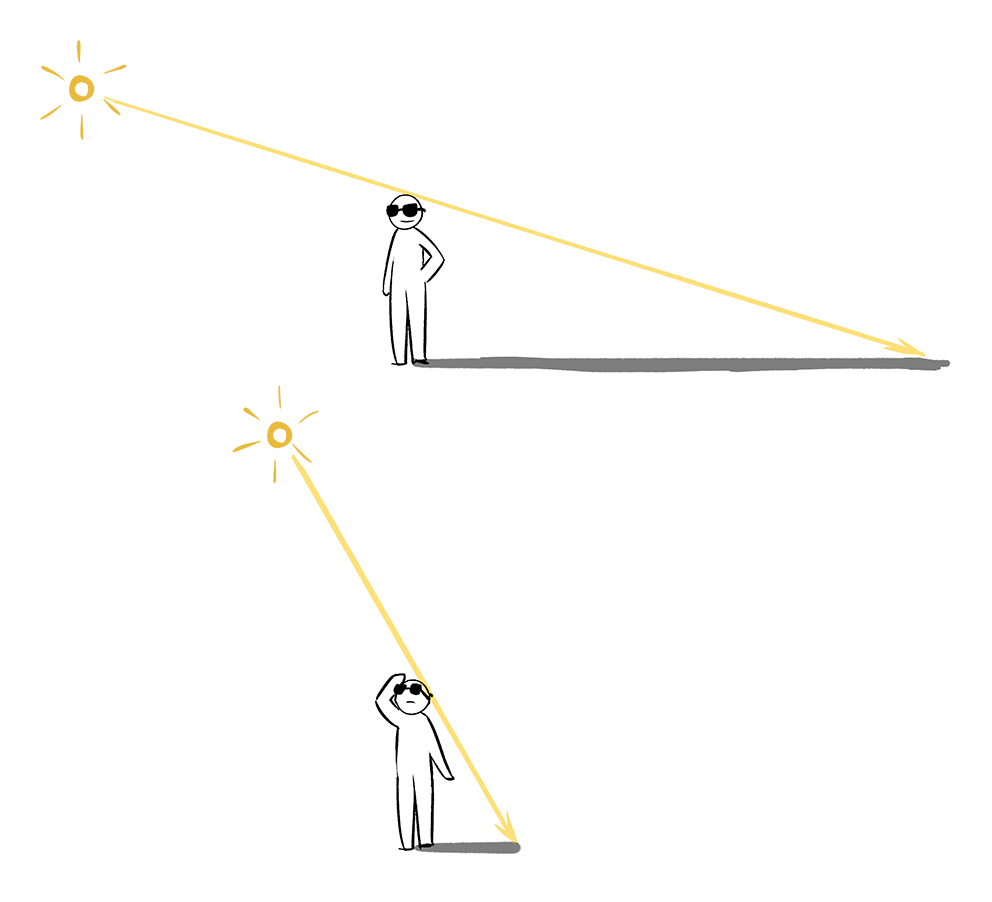
- Bandage shadow: The silhouette that our object projects on the surface where information technology is standing. Its shape tin grow or compress depending on the angle of the light.
Don't forget near reflection!
Reflection occurs when the low-cal hits a surface and changes its direction. Any surface can reverberate calorie-free (some more than than others); that is why you lot don't tend to discover 100% dark shadows in the real globe (unless there is no light at all!).
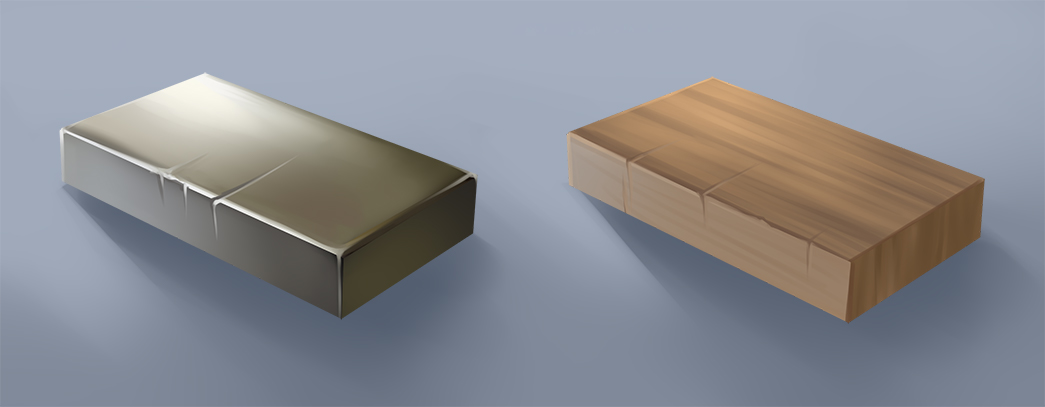
- Highlight: This is the reflection of the low-cal source on the object. Its position depends on your betoken of view – if you motion, the highlight will too change its position. On the value scale, it has a lighter tone than the straight light, but retrieve that its intensity depends on the material of the object – metals can take a more than visible shine than forest, for instance.
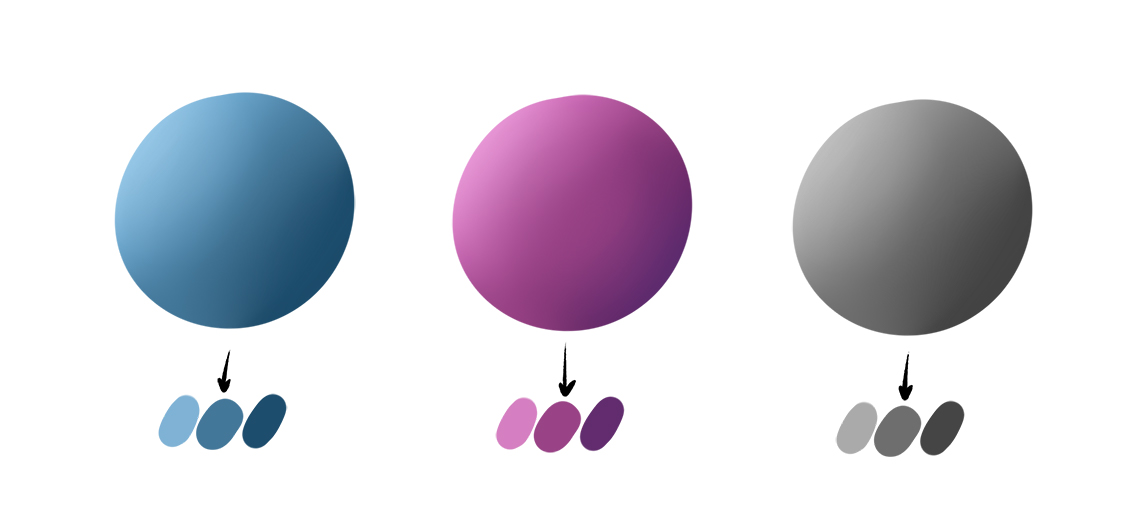
- Reflected lite: This is the light that, after bouncing on the table, changes its direction and is then projected on the sphere. You can meet this better on the colored-in example:
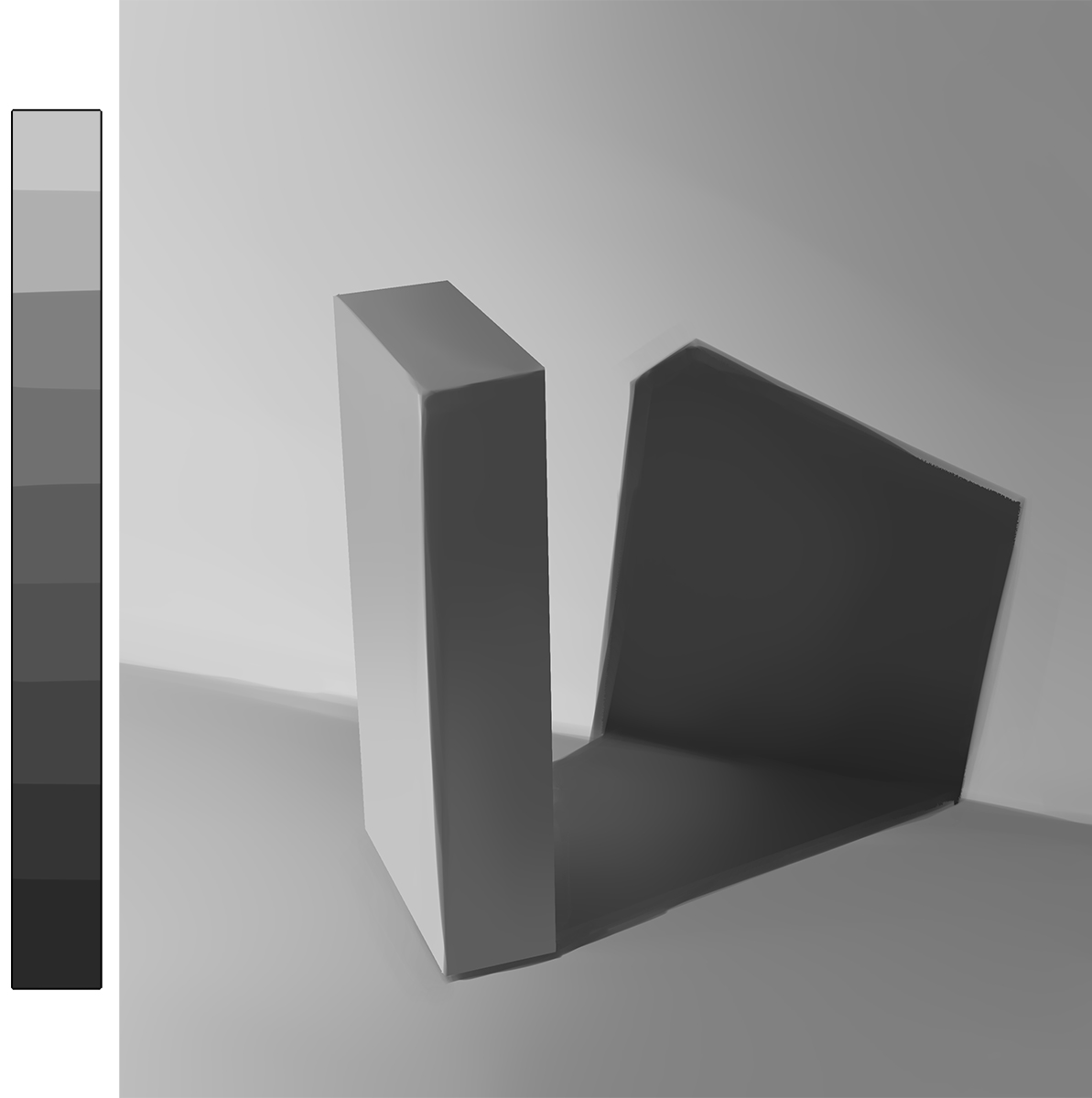
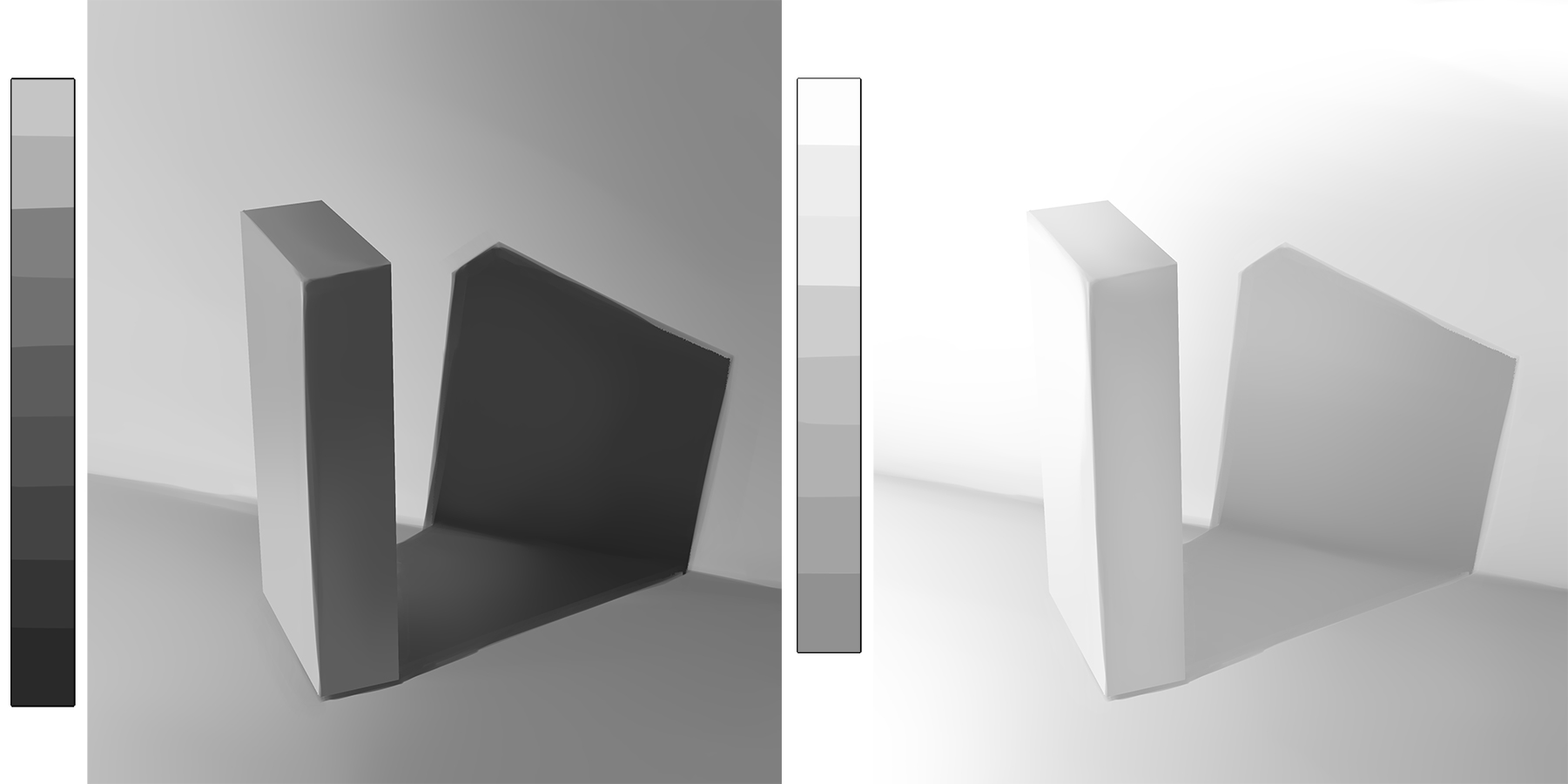
When drawing, you add values to the shapes defining both lights and shadows. If you imagine these values on a calibration, you can easily figure out the effulgence and darkness of each gray tone.
The key is to proceed the right balance between light and dark tones to detail the prototype successfully. They piece of work as a team – the light defines the shadow, and the shadow defines the light.
The left image is underexposed, tones are very dark and resemble i another, details are lost, and the shape flattens.
On the right, it is the opposite, the prototype is overexposed, the amount of low-cal is blinding, and there is almost no distinction betwixt the effigy and the background. The transition of tones is very subtle, the darkest ones are still very light.
Place the Surfaces!
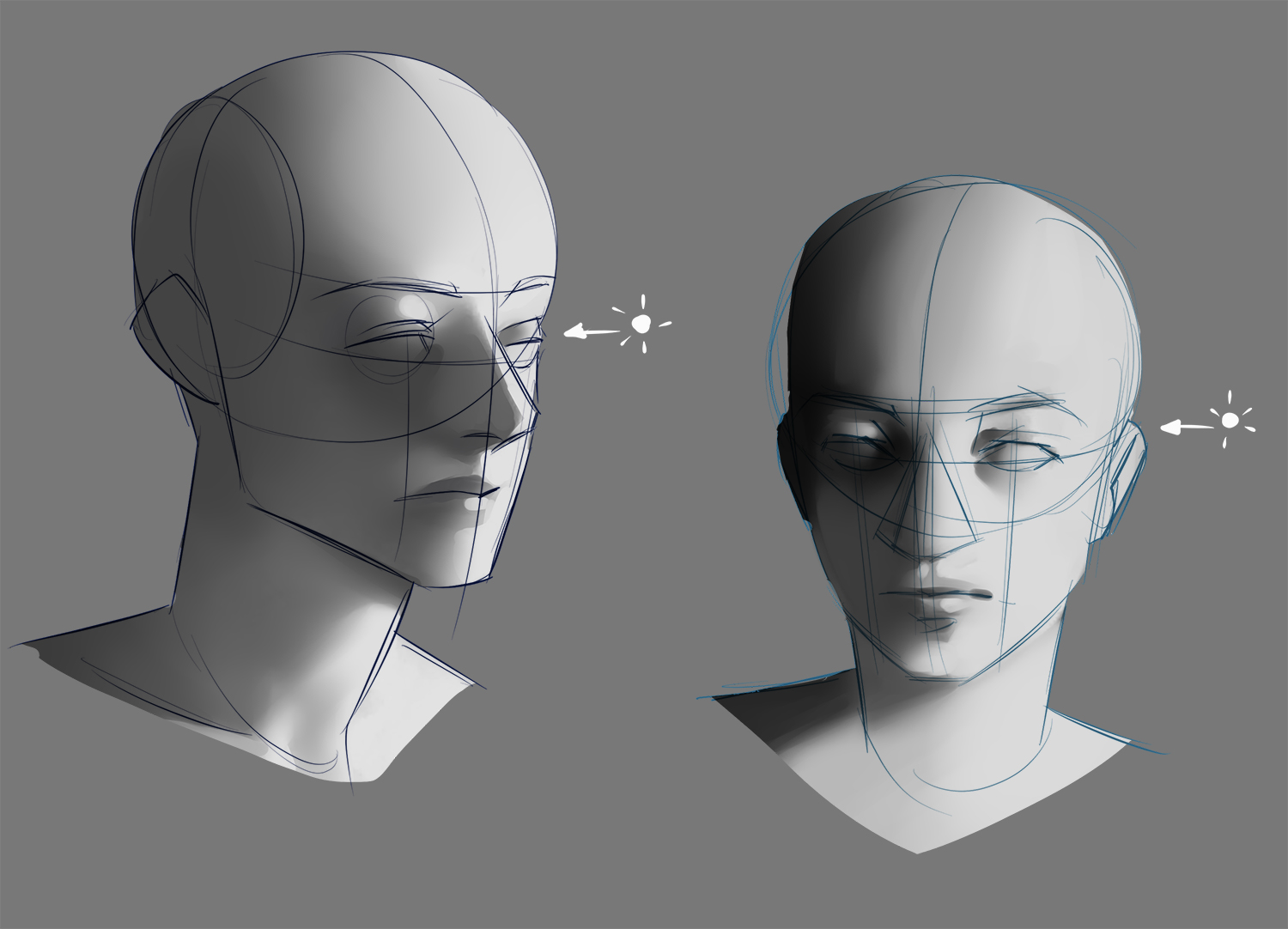
Many immature artists tend to create "shadow effects" that exercise not stand for the volume of objects correctly.
To apply shadow to, for case, a human confront, it is useful to know something about its anatomy, notice its structure, and build upward the face based on simple geometric shapes (cubes, cylinders, spheres…) that allow us to identify, without too much difficulty, the surfaces facing light areas, dark areas, and those areas affected by the calorie-free bouncing off another surface.
Propagation of Light
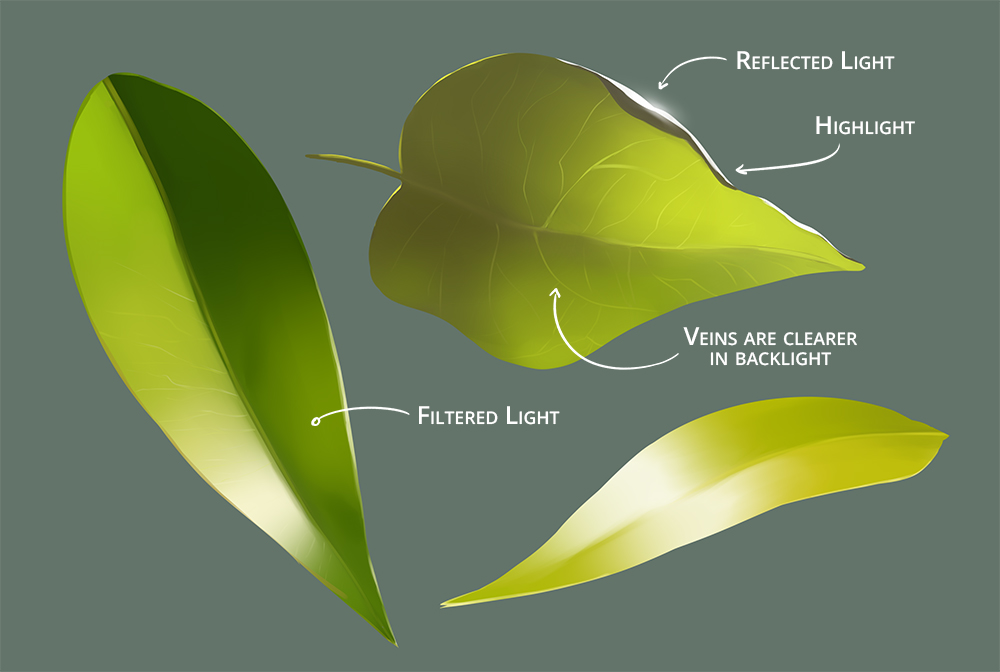
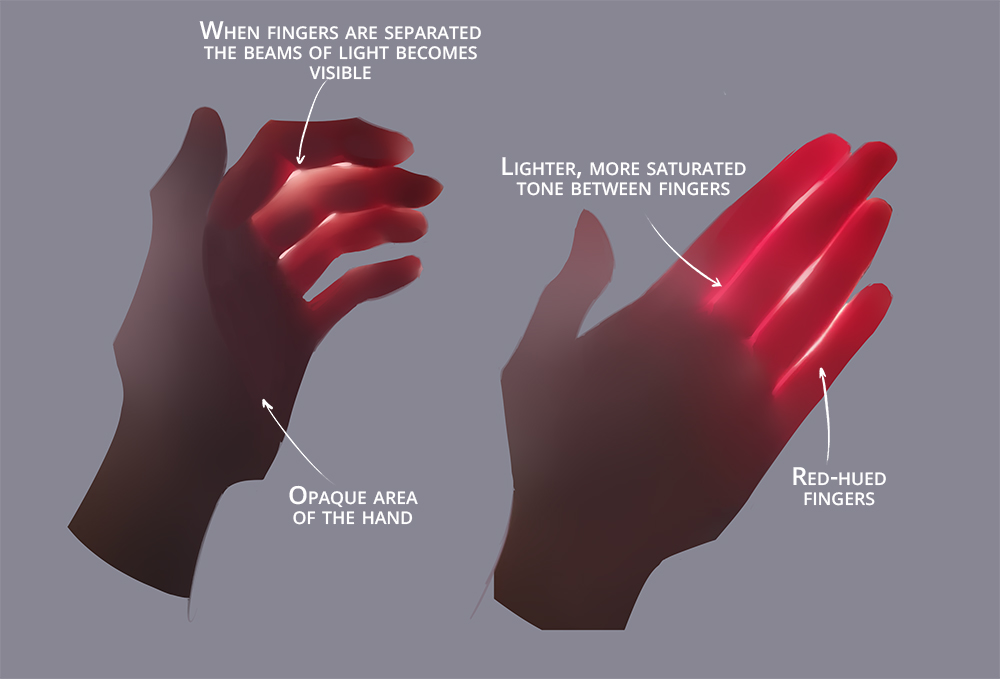
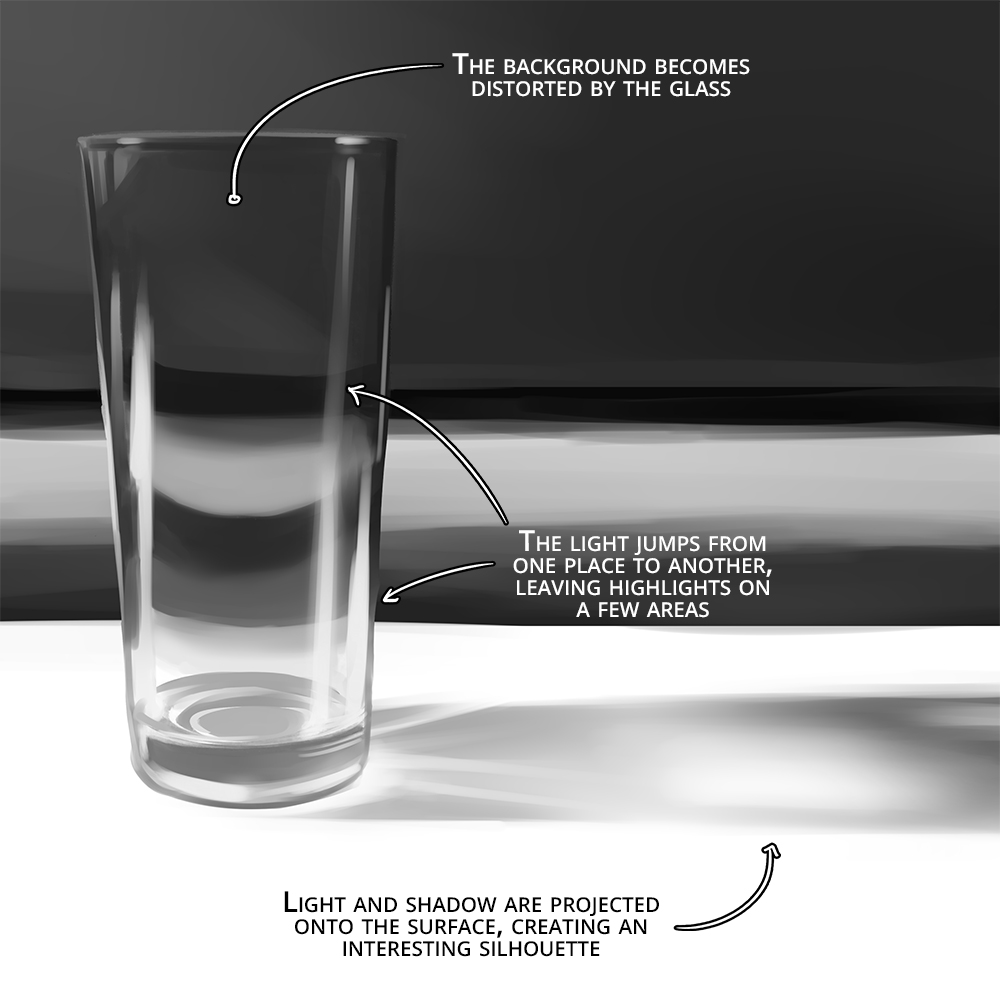
Opaque objects do not let light to pass through them and cast an fifty-fifty shadow. The claiming, notwithstanding, comes when we deal with translucent or transparent objects!
Light passes through translucent materials but partially. The colors of the object can become more than saturated due to the light traveling through them, as in these leaves and easily:
Transparent objects allow more light to pass through. Cartoon these types of objects is usually more than complicated; you need to pay close attention to details! For instance, in a glass:
Types of Lite
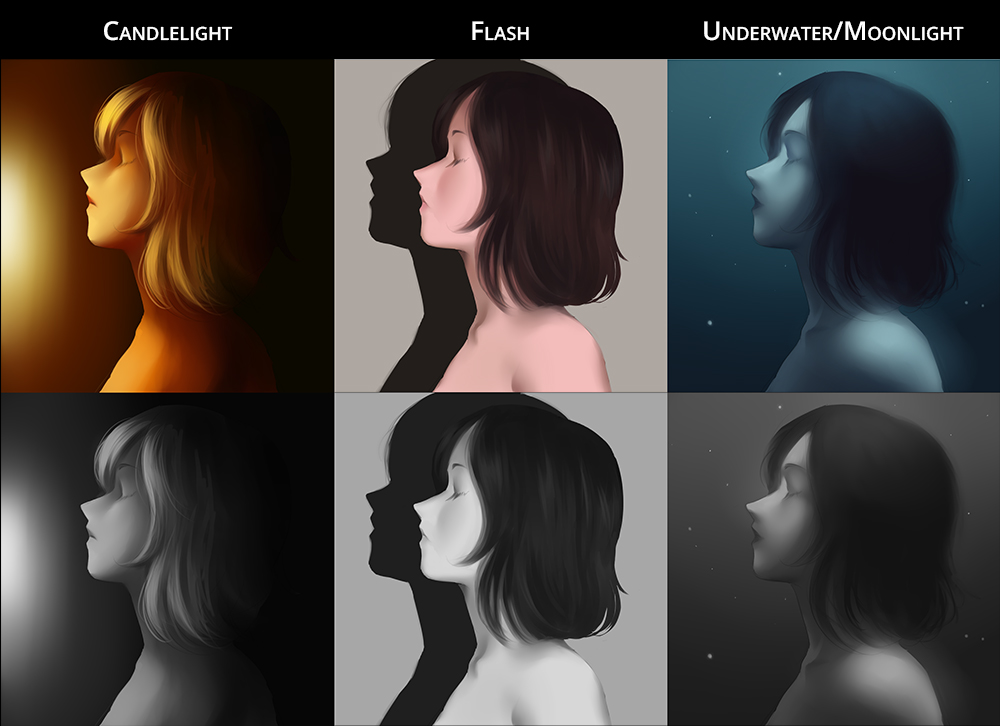
The sunday is our principal source of natural light; we can discover how its intensity, colors, and shadows alter throughout the day.
Light from bogus sources (spotlights, bulbs, cellphone screens) is more constant and allows us to control its management, vividness, and colour.
In the following case, I tried to emulate different light sources using the same drawing equally a base of operations. Yous can also see the values in grayscale:
Another adept thought is to play with the lite direction to create unique compositions:
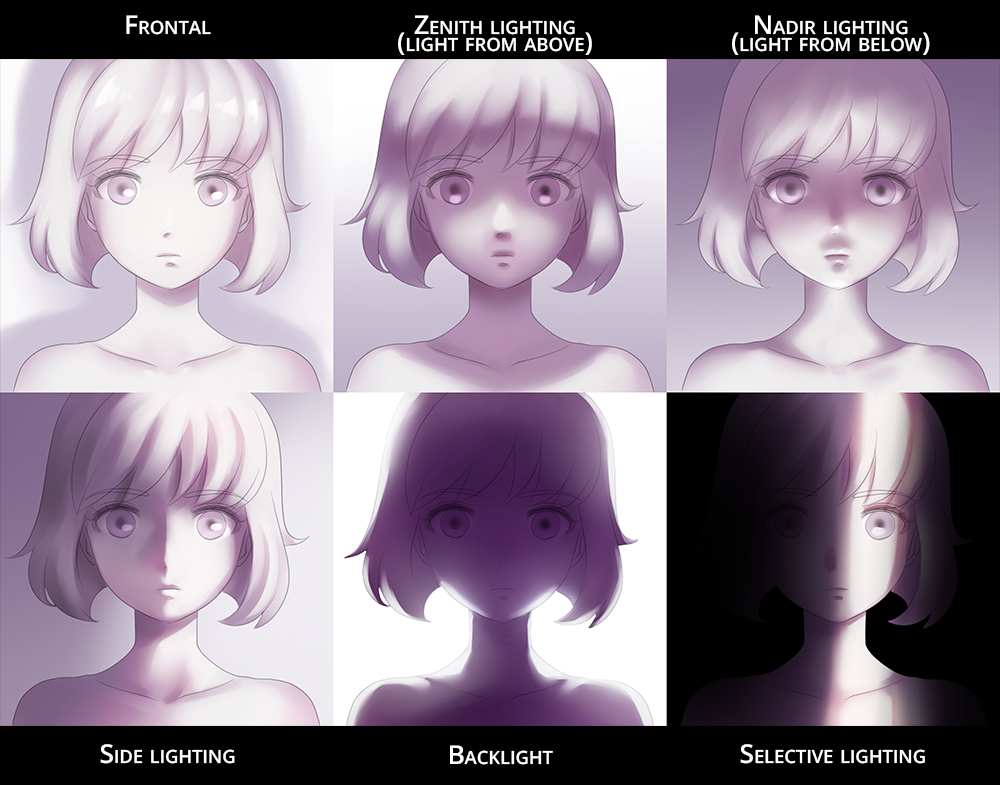
Each scene tells a different story!
Brushing Upward
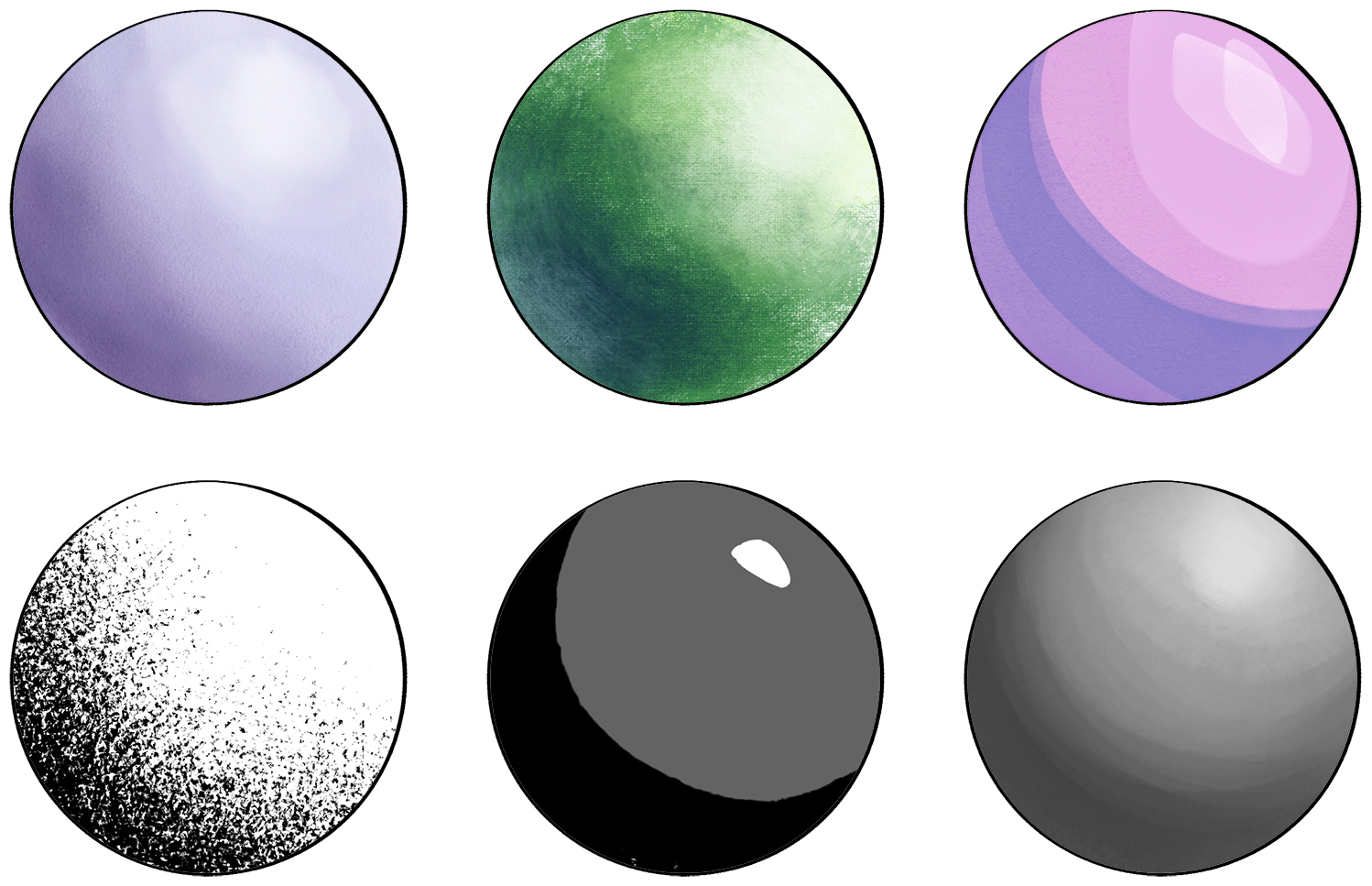
In traditional media, we have an endless range of materials: ink, graphite, charcoal, watercolors, acrylic, oil, etc. The medium also provides unlike textures and colors. All of these traditional techniques can exist recreated in digital media, past adjusting brush settings, texture, opacity, strokes, etc. It is also possible to explore new trends and experiment with different finishes.
The options are endless, but mastering a technique is easier in one case y'all accept fundamentals mastered; the next thing yous take to do is to practise, practice, practice!
I hope this guide tin help and inspire you to experiment with low-cal and attempt new things in your drawings.
If you like, you tin can check out my social media and portfolio to see some of my work.
https://www.instagram.com/eri_duh/
https://twitter.com/eri_duh
https://www.artstation.com/eridey
Thank you for reading!
– Eridey

Source: https://www.clipstudio.net/how-to-draw/archives/163236
Posted by: helsleybeenter.blogspot.com
0 Response to "How To Draw Shadow Letters A-z"
Post a Comment